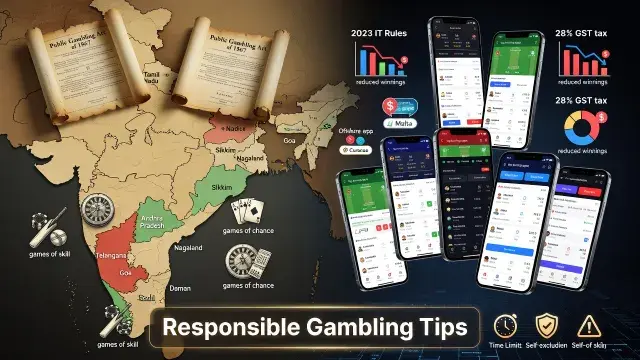
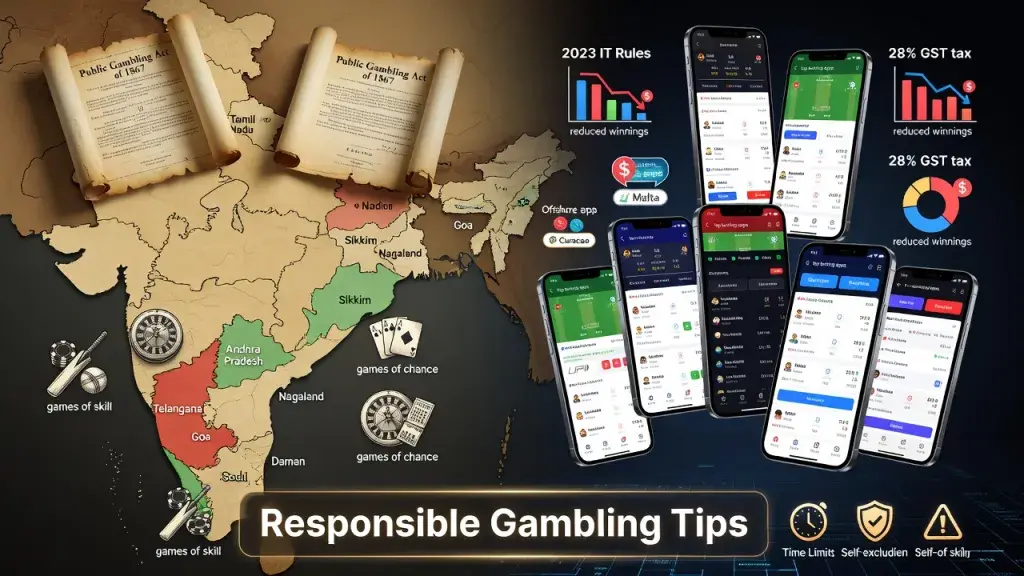
A patchwork of colonial-era laws still governs how millions of Indians place a bet today. The Public Gambling Act of 1867 was written for a country that had never seen a smartphone, yet courts and state legislatures continue to lean on it when deciding what counts as legal wagering in the digital age. That gap between old law and new behavior has created genuine confusion for players, app developers, and regulators alike.
What makes this moment different is the speed at which state-level rules are shifting alongside federal attention to online gaming taxation and consumer protection. Several states have tightened restrictions on real-money gaming apps, while others have stayed silent, leaving offshore platforms to fill the vacuum. For anyone trying to figure out where they legally stand, resources explaining the details of a new bet in india are becoming essential reading rather than optional background. The result is a fractured but fast-evolving market that rewards informed players and punishes the careless ones.
This piece breaks down where the law actually stands, what changed recently, how to evaluate betting apps operating in this space, and how to gamble without letting it damage your finances or wellbeing.
Understanding the New Betting Rules in India
What Changed and Why
India's gambling framework has never been a single national law. Instead, it's a layered system where the central government sets broad boundaries and individual states decide how to police gambling within their borders. Recent years have brought a wave of amendments at the state level, particularly around online formats, driven largely by concerns over problem gambling, tax revenue leakage to offshore operators, and pressure from advocacy groups worried about underage access. The new betting rules in India reflect an attempt to modernize enforcement without a comprehensive federal rewrite, which means the rules you encounter often depend entirely on your postal code.
Central vs State Jurisdiction
Gambling sits on the State List under India's constitution, giving each state authority to legislate independently. Tamil Nadu, Andhra Pradesh, and Telangana have taken restrictive stances on online real-money games, while Sikkim and Nagaland have issued licensing frameworks that permit certain forms of regulated betting. Goa and Daman remain the rare jurisdictions where physical casinos operate legally. This division explains why a platform can be fully lawful for a user in one state and technically inaccessible for a user in another, even though both are using the same app.
Key Legal Distinctions: Games of Skill vs Chance
Indian courts have repeatedly drawn a line between games of skill and games of chance, a distinction that determines whether an activity falls under gambling statutes at all. Fantasy sports and certain card games like rummy have been judicially classified as skill-based in multiple rulings, which exempts them from the gambling prohibitions that apply to pure chance games like lotteries or dice-based betting. Sports betting on outcomes like cricket matches sits in murkier territory, since predicting a match result involves both knowledge and chance in varying proportions depending on how a platform structures the wager.
- Games of skill: fantasy sports, rummy, certain poker formats
- Games of chance: lotteries, dice games, roulette-style betting
- Hybrid or contested: sports betting, some card games with betting elements
Online Sports Betting Legality in India Explained
Federal Law vs State-Level Interpretations
No central Indian statute explicitly legalizes or bans online sports betting nationwide. The Information Technology Act touches on aspects of online conduct but doesn't directly address wagering. This absence of clarity means online sports betting legality is largely inferred from how state gambling laws are interpreted and applied, and from whether a platform is licensed offshore or operates without any Indian license at all. Many Indian bettors use platforms registered in jurisdictions like Malta or Curacao, a workaround that exists in a legal gray zone rather than outright illegality for the individual user.
Cricket Betting: A Special Case
Cricket dominates India's betting culture, and its legal status deserves particular attention. No law criminalizes an individual for placing a bet on a cricket match through an offshore-licensed app, since Indian law generally targets operators rather than bettors. However, running an unlicensed betting operation within India remains a criminal offense, which is why virtually every major platform serving Indian cricket bettors is headquartered outside the country. This distinction between operator liability and player liability is frequently misunderstood.
Offshore Platforms and Legal Gray Areas
Offshore betting sites accept Indian rupees, offer local payment methods, and market heavily during major tournaments, yet none hold an Indian gambling license because no such license currently exists for sports betting at the national level. Users technically operate in an unregulated space with no domestic consumer protection if a dispute arises. This is the single biggest risk factor for Indian bettors: the absence of a licensing body means there's no local authority to appeal to if a platform withholds winnings or shuts down abruptly.
Latest Indian Gaming Regulation Update
Recent Amendments and Draft Bills
Parliament has periodically discussed comprehensive gaming legislation, including proposals to create a central regulatory body for online gaming similar to how telecom or banking sectors are overseen. The Ministry of Electronics and Information Technology introduced rules in 2023 requiring online real-money gaming platforms to register with self-regulatory bodies and undergo due diligence checks, a move that primarily targeted fantasy sports and skill-gaming apps rather than sports betting directly. This Indian gaming regulation update signaled intent to formalize oversight, though sports betting specifically remains outside its immediate scope.
Tax Implications for Bettors and Operators
The Goods and Services Tax Council implemented a 28% tax on the full face value of bets placed through online gaming platforms, a change that significantly increased costs for both operators and end users. This tax treats online gaming, casino activity, and horse race betting under a unified high-rate structure, which has pushed some platforms to restructure their fee models and pass costs onto players through reduced payout ratios. Bettors should factor this tax burden into their expectations of net winnings, since it directly reduces the effective payout compared to markets with lighter taxation.
State-Specific Bans and Approvals
Karnataka attempted an outright ban on online betting and gaming in 2021, only to see the law struck down by the state's High Court on constitutional grounds. Tamil Nadu passed similar restrictive legislation aimed at online rummy and poker platforms, triggering ongoing litigation. Meanwhile, Sikkim continues to operate a licensing regime for online gaming that predates most other states' regulatory attempts, offering a template that other states have studied but not widely replicated. This uneven legal landscape means bettors need to check their specific state's current stance rather than assuming national uniformity.
Top Betting Apps in India: What to Look For
Licensing and Security Standards
A legitimate betting app should disclose its licensing jurisdiction clearly, typically Curacao, Malta, or the UK Gambling Commission, rather than hiding this information in fine print. Encryption standards, transparent terms of service, and a physical or corporate registration address are baseline indicators of a platform worth trusting. Betting apps in India that avoid disclosing ownership structure or licensing details should be treated with suspicion regardless of how polished their interface looks.
Payment Methods and Withdrawal Speed
UPI, net banking, and e-wallets have become the dominant payment rails for Indian bettors, largely replacing card payments due to banking restrictions on gambling transactions. Withdrawal speed varies enormously between platforms, with reputable operators processing payouts within 24 to 48 hours and less reliable ones stretching this to weeks or introducing arbitrary verification delays. Testing a platform with a small deposit and withdrawal before committing larger sums remains the most practical way to verify reliability.
User Experience and Customer Support
Live chat availability, response time, and the presence of India-specific support in Hindi or regional languages separate professional operators from bare-bones offshore sites. A platform's odds transparency, how clearly it displays margins built into pricing, also signals whether it treats users fairly or extracts value through opaque pricing structures.
- Verify licensing jurisdiction before depositing funds
- Check withdrawal history and user reviews on independent forums
- Confirm UPI or preferred payment method support
- Test customer support responsiveness before large transactions
Responsible Gambling in India: Staying Safe While Betting
Recognizing Risk Signs
Chasing losses, betting amounts that affect essential expenses, and hiding betting activity from family members are early warning signs that gambling has shifted from entertainment to compulsion. Responsible gambling in India remains underdiscussed compared to markets like the UK, where public health messaging around gambling harm is far more visible and normalized.
Tools for Self-Regulation: Limits and Self-Exclusion
Many licensed platforms offer deposit limits, loss limits, and session time reminders that users can set proactively before emotions take over during a losing streak. Self-exclusion features, which temporarily or permanently lock account access, exist on most reputable international platforms even though India lacks a centralized self-exclusion registry that spans all operators.
Support Resources and Helplines
Mental health professionals in India increasingly recognize problem gambling as a treatable behavioral condition, with counseling services available through both private practitioners and some public health institutions. Anyone noticing financial strain, relationship damage, or anxiety tied to betting activity should treat these as legitimate reasons to seek professional support rather than signs of personal failure.
Frequently Asked Questions
Is online betting completely illegal in India?
No single national law bans it outright. Legality depends on your state's specific gambling laws, whether the platform is offshore-licensed, and whether the activity is classified as a game of skill or chance under prevailing court interpretations.
Can I get in legal trouble for using an offshore betting app?
Indian law primarily targets unlicensed operators rather than individual bettors, so using an offshore platform rarely results in criminal liability for the user. That said, laws vary by state, and some jurisdictions have pursued stricter enforcement against players in specific circumstances.
Why do winnings feel smaller than expected after the 28% GST?
The tax applies to the full face value of your bet rather than just the profit margin, which significantly reduces net returns compared to markets with lower or profit-only taxation. Factor this into your expected payout before placing large wagers.
How do I verify a betting app is trustworthy before depositing money?
Check for clear licensing disclosure, read independent user reviews focused on withdrawal experiences, and test the platform with a small transaction first. Avoid apps that obscure ownership information or pressure you into large initial deposits.
What's the difference between fantasy sports and sports betting under Indian law?
Fantasy sports have been judicially classified as games of skill in multiple court rulings, exempting them from gambling prohibitions that apply more directly to chance-based wagering. Sports betting on match outcomes occupies a less clearly defined legal category, which is why it remains largely served by offshore platforms.
Are there official helplines for gambling addiction in India?
Several private mental health organizations and counseling networks in India now offer support specifically for gambling-related behavioral issues, though a unified national helpline comparable to those in the UK or Australia is still not widely established. Consulting a licensed therapist or psychiatrist remains the most direct path to structured help.