A goalkeeper touches the ball fewer times per match than almost anyone else on the field, yet a single mistake in those touches can decide the outcome of an entire season. That imbalance between opportunity and consequence is what makes the position unlike any other in soccer. Outfield players get to make up for errors over ninety minutes of movement and passing. A goalkeeper often gets one chance, sometimes two, and has to be right nearly every time.
This is why learning how to play goalie demands a different kind of preparation than learning any outfield role. It's not just about height or bravery in front of a shot - it's about reading angles, controlling space, and reacting in fractions of a second. Plenty of young players discover this the hard way, diving late or standing too far off their line, and wonder why their reflexes never seem to catch up. Interestingly, some goalkeepers first sharpen their reaction instincts in unrelated settings - even casual reflex-based games like how to play goal have been mentioned by coaches as an unconventional way to illustrate timing and anticipation, though nothing replaces work on the actual pitch.
What follows is a practical breakdown of the technical foundation, spatial awareness, shot-stopping mechanics, and structured training that separate a shaky last line of defense from a genuinely reliable one.
Understanding the Goalkeeper's Role in Modern Soccer
Why Goalkeeping Is a Specialized Skill Set
Outfield players train to run, pass, and strike a ball with precision over distance. Goalkeepers train to do almost the opposite: stay compact, explode over short distances, and use their hands in ways that would draw a foul anywhere else on the field. The muscle patterns, decision-making speed, and even the psychological demands are distinct enough that most professional clubs employ dedicated goalkeeper coaches who rarely work with outfield squads. Learning how to play goalie means accepting that the position is closer to a hybrid of gymnastics, chess, and sprinting than to conventional soccer training.
The Goalkeeper as the Last Line - and the First Attacker
Modern tactical systems have redefined the position. A goalkeeper is no longer judged solely on saves; distribution, ball-playing ability under pressure, and communication with the back line now carry real weight. Coaches expect keepers to read buildup play well before the ball arrives, effectively acting as an outfield defender when the team has possession deep in its own half.
- Shot-stopping and reflex saves
- Command of the penalty area on crosses and set pieces
- Distribution - short and long - to start attacking sequences
- Verbal organization of the defensive line
Basic Goalie Techniques Every Player Must Master
Hand Positioning and Catching Fundamentals
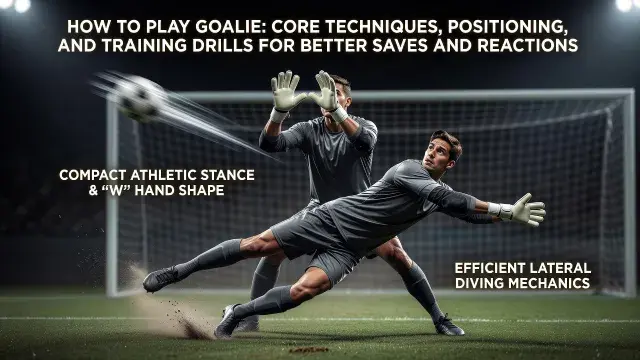
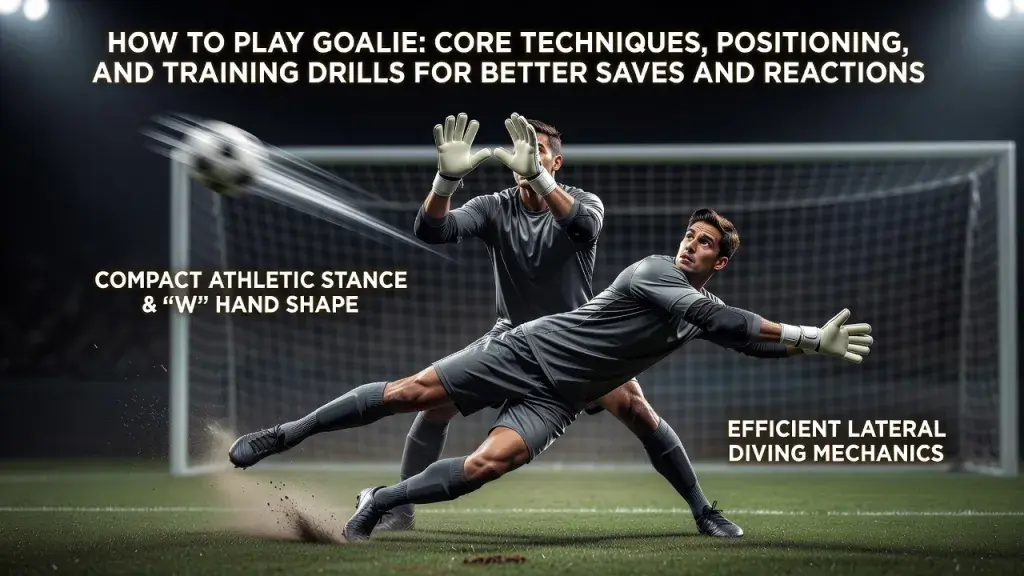
The "W" shape - thumbs and index fingers close together behind the ball - remains the standard hand position for catching shots above waist height. It gives maximum surface contact and reduces the chance of the ball squirting through the hands under impact. For low, hard-driven shots, the "scoop" technique with palms facing slightly upward and forearms locked is more reliable than trying to force a standing catch, which often leads to fumbles under pressure.
Footwork and Body Alignment
Basic goalie techniques start well before the dive. Correct footwork - small, quick adjustment steps rather than long strides - keeps the body square to the ball and ready to push off in any direction. A goalkeeper caught flat-footed or with crossed legs when a shot is struck will almost always react a half-second too late, and in this position, half a second is the difference between a save and a goal conceded.
Diving Mechanics Without Wasted Movement
Efficient diving is not about height or dramatic effort - it's about economy. The push-off leg drives laterally while the upper body rotates to present the largest possible blocking surface. Goalkeepers who "collapse" toward the ball rather than genuinely dive often make saves that look less spectacular but are far more consistent, because they conserve energy and stay balanced for a potential rebound.
Positioning in Soccer Goal: The Foundation of Reliable Saves
Reading Angles and Narrowing Shooting Lanes
Good positioning in soccer goal reduces the amount of reacting a goalkeeper has to do in the first place. By stepping slightly off the line and toward the ball, a keeper narrows the visible angle a striker has to work with, sometimes making a shot on target impossible without extraordinary precision. This is the difference between a goalkeeper who looks busy and one who looks calm - the calm ones have already cut down the danger before the shot is struck.
Positioning for Crosses and Set Pieces
Crosses demand a different spatial calculation entirely. A goalkeeper must judge trajectory, flight, and the movement of both teammates and attackers converging on the same six-yard area. Coming too early invites a collision or a missed punch; coming too late concedes a free header. Confident command of the box on set pieces is often what separates goalkeepers trusted by their defense from those who are constantly second-guessed.
Adjusting Position Based on Ball Location
Elite goalkeepers shift position continuously as the ball moves around the pitch, staying on an imaginary arc relative to the ball rather than standing frozen on the goal line. This constant micro-adjustment is one of the more underrated basic goalie techniques, and it's largely invisible to casual observers because it happens well before any shot is actually taken.
How to Save Shots and Improve Reaction Time
Anticipation Versus Pure Reflex
Not every save comes down to raw speed. Experienced goalkeepers read a striker's hips, plant foot, and backlift to anticipate shot direction before the ball is even struck. This is why some keepers who aren't the fastest athletically still manage to save shots and reactions that seem impossible - their anticipation compensates for what pure reflex cannot.
Reaction Training for Close-Range Shots
At close range, anticipation matters less and instinct takes over almost entirely. Reaction drills using tennis balls, reaction balls with irregular bounce, or rapid-fire shooting sessions from short distance train the nervous system to respond without conscious thought. This kind of training builds the split-second instinct required when a deflection or rebound leaves almost no time to think.
Recovering After the Initial Save
A save is rarely finished the moment the ball touches the goalkeeper's hands. Parries, rebounds, and second-phase attacks are common, especially from crosses and corners. Strong goalkeepers train specifically to get back to their feet quickly and reset their body position, because a spilled rebound converted from close range is one of the most preventable ways to concede.
Training Drills for Goalkeepers to Build Consistency
Footwork and Agility Ladder Drills
Agility ladders, cone patterns, and lateral shuffle drills build the quick, controlled footwork that underpins almost every other goalkeeping skill. These drills should be a near-daily part of any serious training plan, since footwork deteriorates quickly without regular repetition.
Shot-Stopping Repetition Under Fatigue
Facing shots while fresh is very different from facing them in the 85th minute of a match. Structured training drills for goalkeepers should include shot-stopping sessions performed after sprint intervals or agility circuits, simulating the fatigue that leads to lapses in concentration and technique late in games.
One-on-One and Breakaway Scenarios
Facing an attacker in open space with no defensive cover requires a distinct skill: judging when to stay tall, when to close down distance, and when to commit to a dive. Repeated one-on-one drills against realistic attacking movement build the composure needed to make the correct decision rather than guessing under pressure.
Small-Sided Games to Simulate Match Realism
Isolated technical drills matter, but nothing replicates match pressure like small-sided games with real consequences - goals that count, defenders under pressure, and unpredictable attacking patterns. Goalkeepers who train exclusively in isolated drills sometimes struggle to transfer that technique into the chaos of an actual match.
Mental and Physical Preparation for Long-Term Goalkeeping Success
Building Concentration Across a Full Match
A goalkeeper might go twenty minutes without a single meaningful touch and then face three shots in ninety seconds. Maintaining focus through long stretches of inactivity is a skill in itself, often trained through visualization and constant tactical engagement even when the ball is far away.
Physical Conditioning Specific to the Position
Explosive power, core strength, and flexibility matter more to goalkeepers than pure endurance. Conditioning programs built around plyometrics, medicine ball throws, and mobility work tend to produce better results than generic distance running, which does little to prepare a keeper for the short, violent bursts of effort the position actually demands.
Recovering Mentally From Mistakes
Every goalkeeper eventually makes a costly error in front of a crowd. What separates careers that last from careers that stall is the ability to reset immediately rather than carrying that mistake into the next play. This mental resilience is rarely discussed alongside technical training, but it's just as essential to long-term success in the position.
Frequently Asked Questions
What is the most important skill for a beginner learning how to play goalie?
Footwork and positioning matter more early on than diving or flashy saves. A beginner who learns to stay balanced, square to the ball, and properly positioned will naturally make more saves look easy, while diving ability without positioning discipline tends to produce inconsistent results.
How often should goalkeepers train separately from the rest of the team?
Most serious goalkeepers benefit from at least two to three dedicated technical sessions per week, in addition to team training. These sessions should focus specifically on handling, footwork, and reaction speed, since general team practice rarely gives a keeper enough repetitions on goalkeeper-specific movements.
What's the best way to improve reaction time for close-range saves?
Reaction balls, rapid-fire shooting drills from short distance, and partner reflex exercises using two balls simultaneously are effective. Consistency matters more than intensity - short, frequent reaction sessions build faster nervous system responses than occasional long ones.
Should young goalkeepers focus on diving technique early in their development?
Diving technique should come after footwork and positioning are solid. Teaching diving too early often creates a habit of relying on athleticism to cover for poor positioning, which becomes harder to correct as players get older and shots get faster.
How important is height for playing goalkeeper at a high level?
Height helps with covering the top of the goal and commanding crosses, but it doesn't guarantee success. Many effective goalkeepers compensate for average height with superior positioning, anticipation, and explosive jumping ability, proving technique often outweighs raw physical stature.
What role does communication play in goalkeeping?
A goalkeeper has the clearest view of the entire pitch and is responsible for organizing the defensive line, calling for crosses, and warning defenders of incoming pressure. Weak communication often leads to defensive confusion, even when individual defenders are technically skilled.