A one-percent difference in return-to-player rate sounds trivial until you calculate what it means across ten thousand spins. That gap can separate a slot that quietly drains a bankroll from one that gives players a genuine fighting chance over the long run. Lightning-themed slots, with their crackling reels and storm-driven bonus rounds, have become some of the most searched titles in online casino libraries, yet very few players actually understand what the RTP figure attached to these games represents or how to use it.
This piece breaks down the mechanics behind lightning storm RTP, explains why thunderstorm-themed slots often carry return rates that differ from standard video slots, and shows how to read the numbers before committing real money. Along the way, we'll look at how volatility interacts with RTP, what separates a well-designed lightning storm game from a poorly balanced one, and where to verify RTP figures before you play. For readers who want to see how these numbers translate into an actual game session, checking the published lightning storm rtp figures against independent testing labs is a useful starting point. By the end, you'll have a practical framework for evaluating any storm-themed slot, not just picking one because the theme looks appealing.
What RTP Actually Means in a Lightning Storm Slot
Return to player is a theoretical percentage calculated over millions of simulated spins, representing how much of every wagered dollar a slot returns to players collectively over time. It is not a promise about any single session, and it is not a countdown timer that pays out predictably. Understanding this distinction matters more with lightning storm RTP figures than with simpler games, because storm-themed slots frequently build volatility into their bonus structures - meaning the stated RTP can feel misleading during short play sessions.
The Difference Between Theoretical and Actual Return
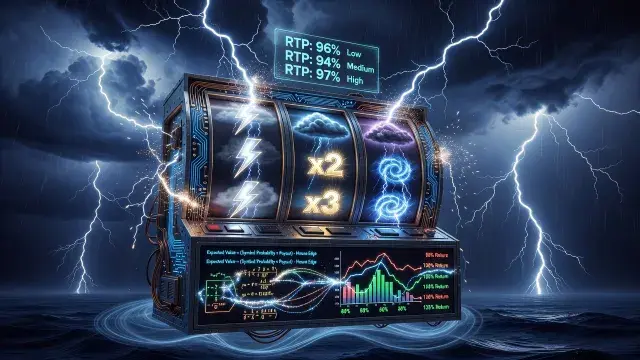
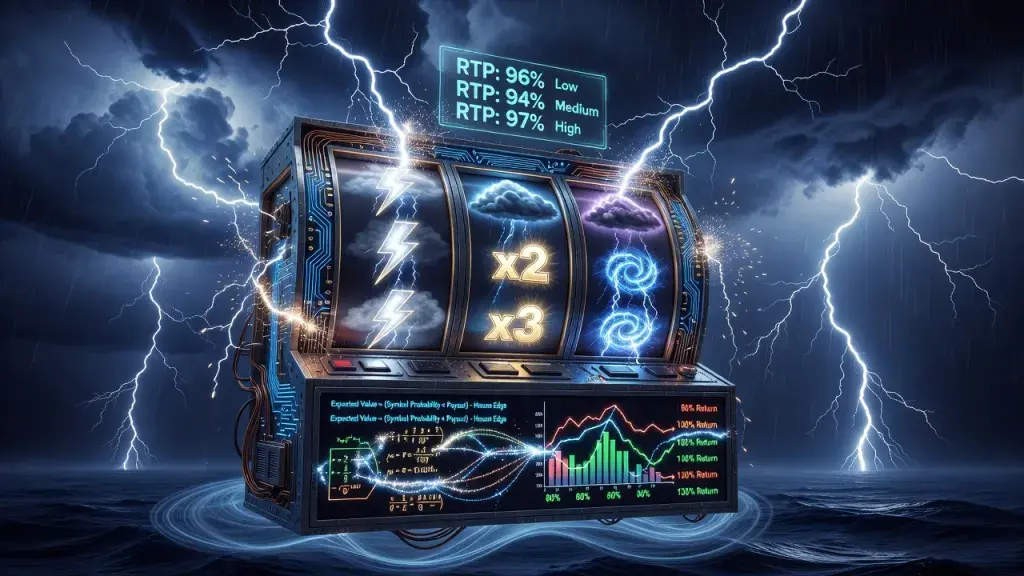
Theoretical RTP is a mathematical average baked into the game's programming. Actual return during any session - an hour, a day, even a week - can swing wildly above or below that number. A lightning storm game advertised at 96% could easily return 80% or 130% during a two-hour session purely due to variance. The published figure only becomes meaningful across a very large sample size.
Why Storm-Themed Slots Often Carry Higher Volatility
Thunderstorm slot RTP models frequently pair a moderate-to-high base RTP with volatile bonus triggers - think free spin rounds activated by "lightning strikes" that multiply wins unpredictably. This design choice keeps the theoretical RTP competitive while creating dramatic swings in actual gameplay, which is part of why these titles feel more thrilling than flatter, low-volatility games.
How Developers Calculate and Publish RTP
Game studios run extensive simulations before release, then submit the resulting RTP lightning storm figures to independent testing labs for certification. Reputable studios display this number directly in the game's paytable or info screen, though the exact placement varies by platform and jurisdiction.
- RTP is calculated across the full lifetime return of a game, not per session
- Certified labs verify the math behind the published percentage
- Volatility and RTP are separate metrics that must be read together
How Lightning Storm RTP Compares to Other Slot Categories
Not all storm-themed titles are built the same way, and comparing lightning storm RTP against broader slot categories reveals useful patterns for players trying to choose wisely.
Classic Fruit Slots vs. Lightning Storm Mechanics
Traditional three-reel fruit machines typically carry simpler paytables and more predictable, lower-variance returns. Lightning storm slots, by contrast, layer in cascading reels, expanding wilds, or multiplier storms that push volatility higher while keeping the average RTP within a similar competitive range, often between 94% and 97%.
Progressive Jackpot Slots and Their RTP Trade-offs
Progressive jackpot slots sacrifice a portion of base RTP to fund the growing jackpot pool, meaning a thunderstorm slot RTP tied to a progressive network will typically sit lower than its non-progressive counterpart. Players chasing large jackpots accept this trade-off knowingly, but it's worth factoring into any comparison.
Branded Weather-Themed Slots: A Growing Niche
Storm, rain, and lightning themes have multiplied across studios precisely because the visual drama of a lightning storm game lends itself well to bonus animations and multiplier reveals. This has created a competitive niche where studios often push RTP slightly higher to differentiate their release from a crowded field.
Where to Verify Real RTP Data Before You Play
Marketing copy and in-game descriptions are not always reliable sources for RTP figures. Knowing where to look for verified data protects players from inflated claims.
In-Game Paytables and Info Screens
Most legitimate slots display RTP directly within the game's help or info menu. If a lightning storm game does not disclose this figure anywhere in its interface, that absence itself is a signal worth noting.
Independent Auditing Bodies and Testing Labs
Third-party testing organizations regularly audit slot math models and publish certification reports. Cross-referencing a casino's claimed RTP against these independent records is the most reliable verification method available to everyday players.
Casino-Specific RTP Variants
A single lightning storm game can exist in multiple configurations across different platforms, since some operators license adjustable RTP versions of the same title. This means the RTP lightning storm figure at one casino may not match the figure at another, even for what appears to be an identical game.
Choosing a Lightning Storm Online Casino With Fair Returns
The game's math model is only half the equation. The platform hosting it determines whether that theoretical return translates into a fair, transparent experience.
Licensing and Regulatory Oversight
A properly licensed lightning storm online casino operates under regulatory frameworks that mandate regular RTP audits and fair-play certification. Checking a platform's license before depositing is a basic but frequently skipped step.
Bonus Terms That Affect Real-World Returns
Wagering requirements attached to deposit bonuses can quietly erode the practical value of even a high thunderstorm slot RTP. A 96% RTP slot played under a 40x wagering requirement behaves very differently, in terms of realistic player outcomes, than the same slot played with real cash.
Payment Reliability and Withdrawal Speed
Fair RTP means little if a platform delays or complicates withdrawals. Evaluating payout history and processing times gives a fuller picture of whether an operator's stated returns match its actual behavior toward players.
- Confirm licensing jurisdiction before registering an account
- Read wagering requirements attached to any welcome bonus
- Check withdrawal processing times through player reviews
Practical Strategies for Playing Lightning Storm Slots Smartly
Understanding the numbers is only useful if it changes how you actually play.
Bankroll Management Around High-Volatility Bonus Rounds
Because lightning storm slots often concentrate their return potential inside bonus features, setting a bankroll that allows enough spins to reach those triggers matters more than chasing base-game wins.
Session Length and Its Effect on Perceived RTP
Short sessions amplify variance and distort how the RTP feels in practice. Longer, disciplined sessions bring actual results closer to the theoretical lightning storm RTP, though never with guaranteed precision.
Reading Volatility Ratings Alongside RTP
Most reputable game providers list a volatility rating - low, medium, or high - next to the RTP figure. Pairing both numbers gives a far more accurate sense of what to expect than RTP alone.
Frequently Asked Questions
Does a higher lightning storm RTP guarantee more frequent wins?
No. RTP measures long-term theoretical return, not win frequency. A high-RTP slot can still have long dry spells if it carries high volatility, since the return is often concentrated in rare, large payouts rather than frequent small ones.
Can the RTP of a lightning storm game change over time?
The underlying math model is fixed at development, but some operators offer licensed variants of the same game with different RTP settings. Always check the specific RTP listed on the platform you're playing on rather than assuming it matches other versions.
Is a thunderstorm slot RTP the same across every online casino?
Not necessarily. Studios sometimes distribute multiple RTP configurations of the same title, and casinos choose which version to license. This is why comparing published figures across platforms before playing is worthwhile.
How much does volatility matter compared to RTP?
Both matter, but for different reasons. RTP tells you the long-term average return, while volatility tells you how bumpy the ride will be to get there. A player with a small bankroll should weigh volatility heavily, since high-volatility slots can deplete funds quickly even with a strong RTP.
What's a reasonable RTP benchmark for lightning-themed slots?
Most competitive lightning storm slots fall between 94% and 97%. Anything notably below 94% deserves scrutiny, especially if the platform doesn't disclose the figure clearly in-game.
Should bonus wagering requirements factor into RTP comparisons?
Yes, significantly. A slot's advertised RTP assumes real-money play without restrictions. Bonus funds tied to steep wagering requirements can effectively reduce practical returns well below the stated theoretical figure.